
%2520copy.webp&w=3840&q=75&dpl=dpl_AWpVNSZhwpgKPseVcRPFNjMNnxdw)
About Us
The Story of Lvxor
Where you're sitting today, history has been settling for nearly two thousand years.
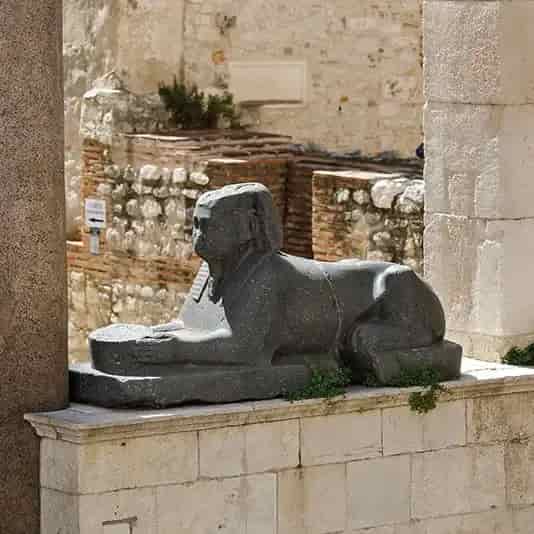
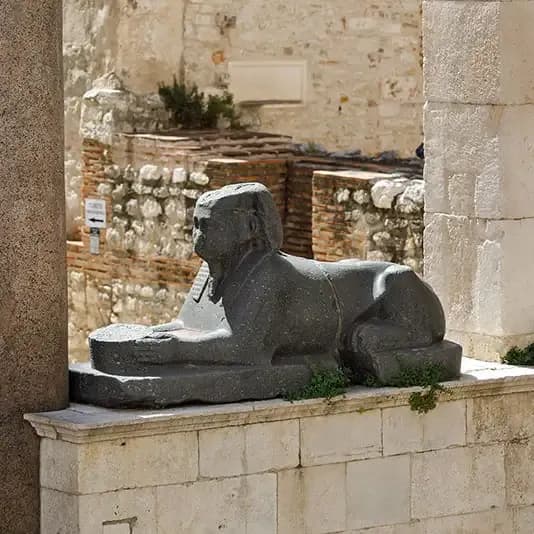
Sphinxes from Luxor
In 305 AD, Emperor Diocletian had Egyptian sphinxes transported from Luxor to his new palace in Split. One still stands on Peristil Square, right beside our venue. Hence the name Lvxor.
Temple, Council Hall, Palace
The space Lvxor now occupies was built in layers: an ancient temple dedicated to the goddess Venus, then a Gothic column from the former city council hall, and later the palace of the prominent Split family Grisogono, and later the Cipiko family.
Renaissance Masters
Great masters of the Dalmatian Renaissance also left their mark on the space: Juraj Dalmatinac and Nikola Firentinac, whose traces can still be glimpsed in the stone details of the façade.
Baroque and 1941
18th-century Baroque façade elements added new layers to the space, and in 1941 architect Josip Kodl shaped an interior that, in essence, remains preserved today.
Contemporary Art
The space's visual identity is completed by contemporary artworks by Petar Grimani, a bridge between antiquity and today.
.jpg&w=3840&q=75&dpl=dpl_AWpVNSZhwpgKPseVcRPFNjMNnxdw)
Peristil as drawn by architect Robert Adam in 1764.